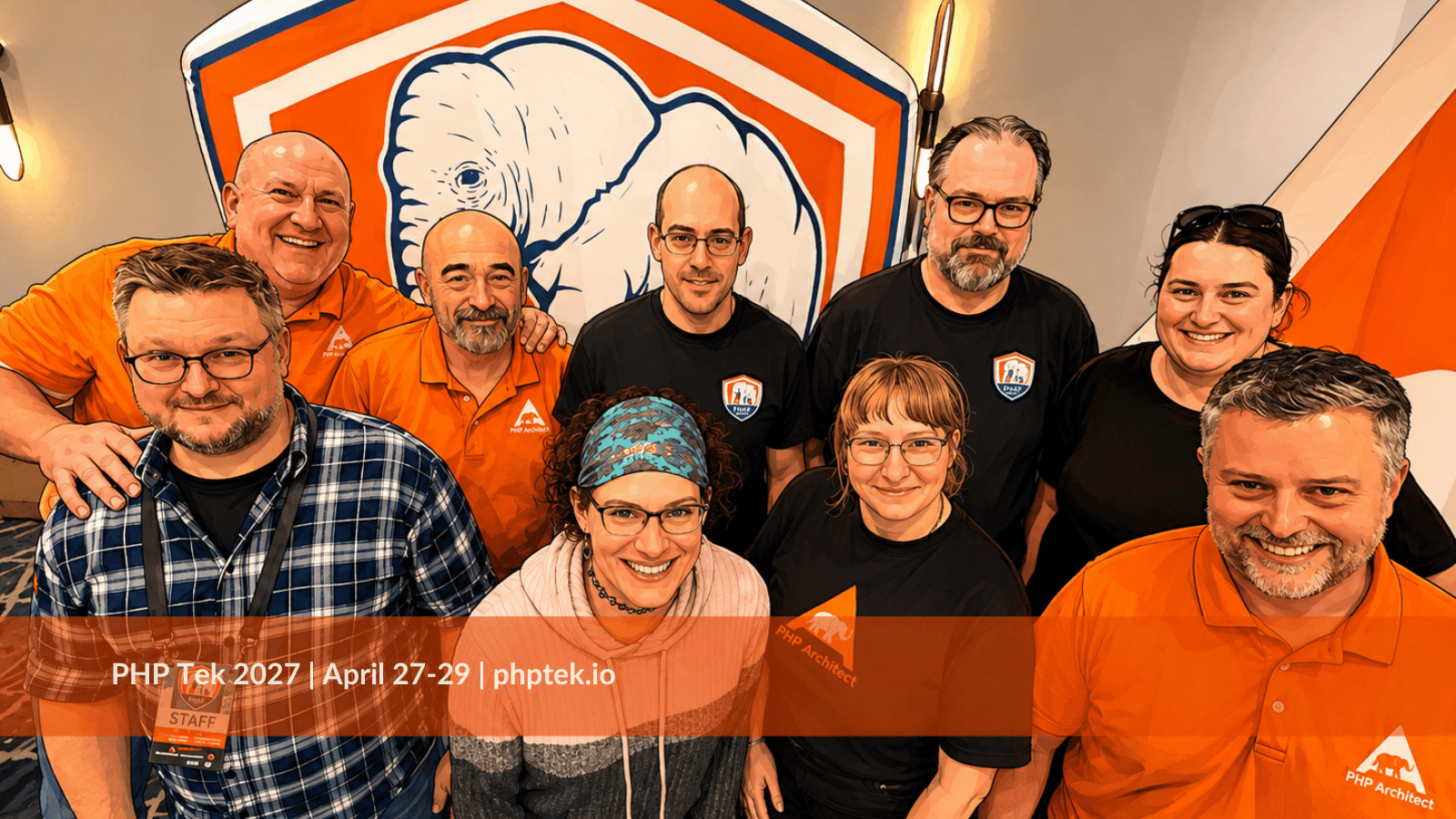
You can watch every talk ever recorded from your couch. You can read every blog post, search every Stack Overflow answer, and ask an AI to explain any framework you like. So why would anyone spend three days and a plane ticket to sit in a hotel ballroom with a few hundred other developers?
Because the couch has never once introduced you to the person who solved your exact problem two years ago. It has never handed you a coffee and said, "Oh, you're migrating off that legacy monolith too? Let me tell you what went wrong for us." And it has never made you feel like part of something bigger than your own repository.
An in-person conference delivers three things that are hard to get anywhere else: education that sticks, camaraderie that lasts, and a positive jolt of energy that follows you back to the office. This post makes the case for all three, speaks plainly to the career question that everyone is thinking and few people say out loud, and gives managers some practical reassurance about sending their developers out the door. And yes, it points you toward PHP Tek 2027, April 27-29, 2027, in Chicago.
If you've been in this industry a while, you know the pitch isn't new. The difference is that after years of video calls, the contrast has never been sharper.
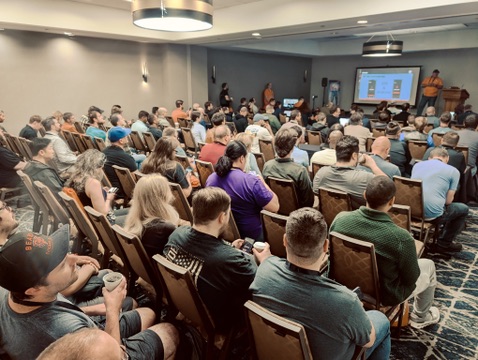
Learning That Actually Sticks
Let's start with the obvious benefit, because it is the one your budget request will lean on. You will learn things at a conference. But the way you learn there is different from the way you learn alone.
When you watch a tutorial at your desk, you are one notification away from abandoning it. Slack pings. A build fails. Someone needs a code review "real quick." At a conference, your phone is in your pocket, your laptop is closed (or open to take notes), and a speaker is walking through a production problem in real time. You are there. Attention is the scarcest resource a developer has, and a conference hands you three days of it with the distractions turned down.
The sessions themselves matter. A good talk compresses months of someone else's trial and error into forty-five minutes. The speaker already stepped on the rake, so you don't have to. At a PHP conference that might be a deep dive into static analysis, a candid look at upgrading a decade-old application to PHP 8.x, or a practical walkthrough of testing strategies that your team can adopt on Monday. The best talks leave you with something you can put into practice almost immediately.
But talk to anyone who has attended a few conferences and they will tell you that the real education happens between the sessions. The industry calls it the hallway track. You catch a speaker at the coffee station and ask the follow-up question that wouldn't fit in the Q&A. You sit at a lunch table and discover that three other people are fighting the same queue-worker bug you've been losing sleep over. Someone sketches an architecture on a napkin and, in two minutes, saves you from a decision you would have regretted in six months.
That kind of exchange is nearly impossible to replicate online. Video calls are built for scheduled, structured conversation. Hallways are built for the accidental, the tangential, and the "wait, can I ask you something?" Those unplanned conversations are where a surprising amount of the value lives.
There is also the matter of workshops and hands-on sessions. A full-day tutorial lets you work through a topic with an instructor who can look at your screen, spot your misunderstanding, and fix it on the spot. You can't get that from a recorded video, and you certainly can't get it from a documentation page that assumes you already know the thing you are trying to learn.
Finally, there is the education nobody puts on the schedule: learning what you don't know. Walk past enough session titles and you will notice topics that never crossed your radar. You will hear a term you've nodded along to without really understanding, and now you have a room full of people willing to explain it. A developer who returns with a list of "things I need to look into" has gained something valuable, even before reading a single page of documentation.
One more thing. Knowledge shared aloud tends to be knowledge retained. When developers return from a conference and walk their team through what they learned, the learning multiplies. One ticket, several people better informed. That's a return on investment managers can measure.
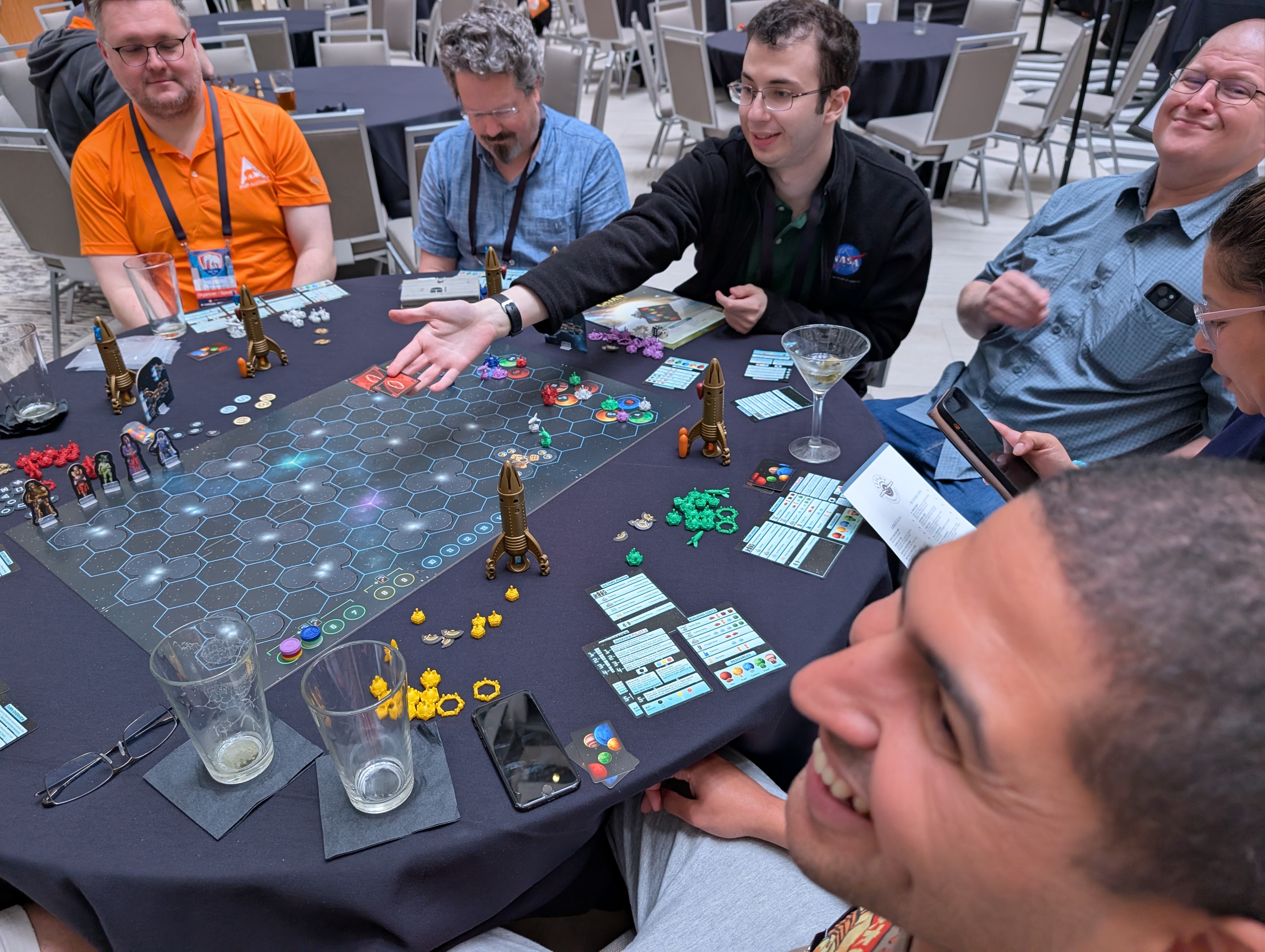
Camaraderie: You Are Not the Only One
Development can be a lonely profession, even on a team. You spend your days inside your own head, wrestling with problems that are hard to explain to anyone outside the field. Plenty of developers are the only person at their company who truly understands the thing they work on. That isolation is easy to miss until you are in a room where it vanishes.
Walk into a conference and something shifts. Everyone around you speaks your language. You don't have to explain what a service container is, why your CI pipeline is flaky, or why "just upgrade it" is never actually just. The relief of being understood is real, and it is one of the most underrated benefits of attending.
Shared experience builds bonds fast. You sit through the same keynote, groan at the same joke, and compare notes over the same mediocre hotel coffee. You stand in the same line for the same lunch and end up in a conversation you didn't plan. By the second day, strangers are saying hello by name. By the third, you are making plans to meet up at the next one.
The PHP community has long been known for this. It has always been a community more than a product, built by people who share code, answer questions, run user groups, and show up for each other. Many of its best-known contributors got started by walking into a room like this one, feeling a bit out of place, and finding someone who was happy to make space. First-time attendees consistently report that the hardest part is the first five minutes. After that, it is mostly a matter of finding a seat and saying, "Hi, what do you work on?"
For developers who work remotely, the effect is even stronger. Remote work has plenty of advantages, but it has a cost: you can go months without being physically near another person who understands your job. A conference restores that. It reminds you that there is an entire profession out there, full of people who care about the same things you do.
And for managers, here is the quiet bonus. Team members who attend together come back with shared stories, shared vocabulary, and a stronger working relationship. A developer who spent three days alongside a colleague from another time zone will be easier to collaborate with on Monday morning. You can't schedule that bond into a sprint plan, but you can buy a pair of plane tickets and let it happen.
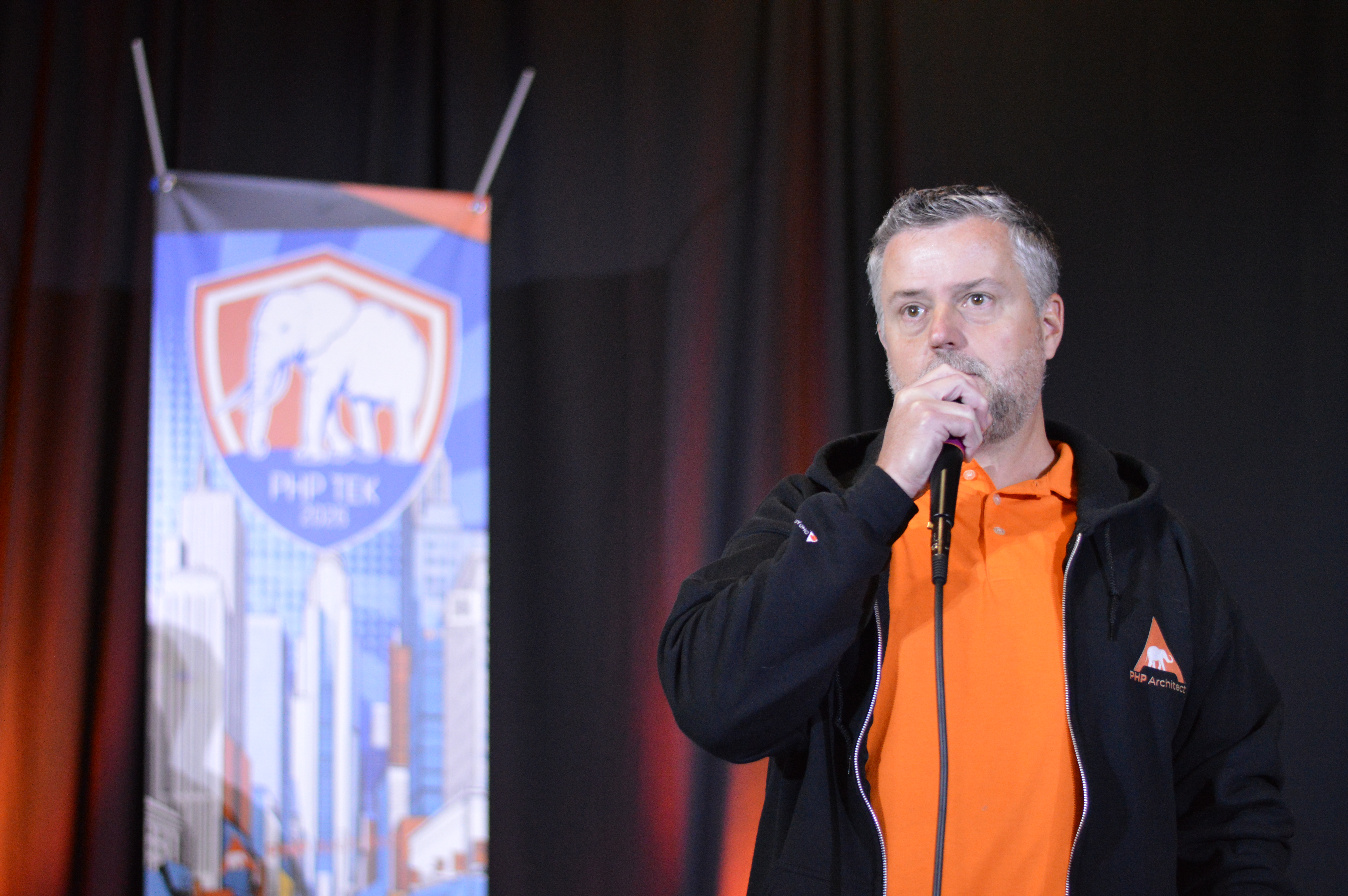
Positivity: Remember Why You Like This Job
Here is a thing nobody puts in a conference proposal: sometimes developers just need a recharge. After a long stretch of tickets, deadlines, and production fires, it is easy to forget why you got into this work in the first place. Burnout rarely arrives with a bang. It creeps in, one tedious sprint at a time.
A conference is a reset button. The energy in the room is infectious. You watch a speaker light up while describing something they built, and you remember that building things is fun. You see a demo of a technique you hadn't considered and think, "I want to try that." That spark is worth protecting, and it is hard to manufacture from a home office.
There is a reason people leave conferences saying they feel inspired. They have spent several days around people who are enthusiastic about the craft, and enthusiasm is contagious. The tone at a good community conference is generous and curious. People ask questions without trying to score points. Experienced developers happily explain the basics to newcomers. Nobody is performing because everyone is too busy learning.
That positivity has a practical payoff. A developer who returns excited about their work is more likely to propose improvements, pick up a stubborn refactor, mentor a junior teammate, or tackle the backlog item everyone has been avoiding. Morale is not a soft metric. It shows up in the quality of the code, the way people treat each other in reviews, and whether the team's best people look forward to Monday.
A change of scenery helps, too. Stepping out of the daily routine gives your brain room to see old problems differently. Many developers report that their best idea of the year came in the shower, on a walk, or in a conversation at a conference. You can't force a breakthrough, but you can put yourself in the places where they tend to happen.
And let's not overlook the simple pleasure of it. Good food, good conversation, a new city, a few evenings of laughing with people who get your jokes. Work doesn't have to feel like a grind to be productive. Sometimes the best investment a team can make is giving its people an experience they will talk about for months.
Growing Your Career (Without Leaving Your Job)
Let's address the elephant in the ballroom. Conferences are good for careers. Developers know it, and managers suspect it. The suspicion tends to come with a worry: if I send my developer to a conference, will they come back with a new job offer?
It's a fair question, so here is a fair answer.
Career growth and job hunting are not the same thing. Most developers who invest in their careers at conferences are not looking for the exit. They are looking for a way to become more capable, more visible, and more confident in the role they already have. Those are different goals, and they usually benefit the employer.
Consider what "advancing your career" actually looks like at a conference. A developer might give a first talk or volunteer at a user group session and discover they enjoy teaching. They might meet a maintainer of a library they use every day and learn how to contribute upstream. They might hear a senior engineer describe the jump from developer to tech lead and finally understand what the path looks like. They might learn to explain technical decisions to non-technical stakeholders, a skill that makes them more valuable to the business they already work for.
None of that requires a new employer. In fact, most of it makes a person better at their current job, and makes their current job more rewarding. People who see a future at their company, who feel that their employer is investing in them, tend to stay. The risk to retention is not the developer who gets to go to a conference. It is the one who never does.
Think about it from the developer's side. When a company says, "We'd like to send you to PHP Tek," the message received is, "We value you, we want you to grow, and we trust you to represent us." That is a powerful message. It builds loyalty in a way that a pizza party and a fruit bowl never will. Developers who feel invested in tend to invest back.
Now, honesty compels us to say that conferences are also places where careers are noticed. Your name gets recognized. Your expertise gets seen. Relationships form with people across the industry, and some of those relationships may lead to new opportunities someday. That is simply how professional communities work, and it is nothing to fear. A developer with a strong network and a reputation is an asset to the team, not a flight risk. They bring back connections, answers, and ideas that the company could never buy outright. And if your culture is one where people are growing, being heard, and doing meaningful work, they will keep choosing to stay.
So, to the managers reading this: you are not handing your developers a free pass to job hunt. You are giving them a reason to be proud of where they work. Conferences are rarely where people decide to leave. More often, they are where people remember why they are glad they are where they are, and return with the energy and skills to make the place better.
And to the developers: if you're looking to grow, a conference is one of the best places to do it. Be curious. Introduce yourself to speakers. Offer to help. Ask the awkward question. Volunteer for something. Leave with new skills and new connections, and bring them home to your team. That's the kind of career development everyone wins from.
Friends Across the Map: Relationships That Outlast the Conference
Here is something that surprises first-time attendees: the people you meet at a conference rarely stay "conference people." Spend a few days with someone, share a few meals and a few late-night debates about dependency injection, and they become a colleague in the truest sense, even if they live two thousand miles away.
Geography matters less than it used to. Your closest professional contacts might be in Berlin, Austin, Toronto, or a town you couldn't find on a map. The conference is where you meet in person once or twice a year. The rest of the time, you stay in touch through chat, email, code reviews, and the occasional "hey, saw this and thought of you."
Why does meeting in person matter if you'll mostly communicate online afterward? Because trust forms differently when you've shared a table. You know their voice, their sense of humor, and how they react when a slide deck crashes. When you later see their name in a pull request or a chat thread, you read it in their voice. Online interactions after an in-person meeting are warmer, easier, and more generous. People ask for help sooner. They give feedback more kindly. They assume good faith.
A few habits make these friendships last:
-
Follow up within a week. A short note saying "Great talking about your caching approach, here's that article I mentioned" turns a pleasant chat into a connection. Do it while the memory is fresh.
-
Give before you ask. Share a useful link, answer a question, or offer an introduction. Relationships that begin with generosity tend to continue that way.
-
Keep a low-effort rhythm. You don't need weekly calls. A thoughtful message every few months, a comment on their blog post, or a note when they ship something is plenty.
-
Meet again. Make the same conference an annual tradition. Seeing familiar faces year after year is how acquaintances become friends, and friends become the people you call when you need advice on your next big decision.
Over time, this network becomes one of your most valuable professional assets, and it belongs to your team as well. When a developer hits a wall, they have a contact who has seen it before. When a team needs an expert opinion, someone knows someone. When a project needs a vendor, a speaker, or a second pair of eyes, the answer is often in a contact list built one hallway conversation at a time.
Managers should note that this is a form of capability a company can't buy off the shelf. A developer with a trusted circle across the country is a developer with a support system. That resilience shows up in how quickly problems get solved and how willingly the person shares what they learn with the people around them.
The distance doesn't weaken these relationships. It makes the annual reunion something to look forward to.
For Managers: Making the Case and Getting the Return
If you manage developers, you already know the arguments for training. You also know the practical objections: the budget, the time away from the sprint, and the nagging question of whether it will pay off. Here is how to approach it so everyone comes out ahead.
Frame it as an investment, not a perk. A conference ticket is a few days of focused, expert-led training, plus networking and exposure to ideas your team won't find on its own. Compare that to the cost of a single bad architectural decision, a prolonged outage, or the recruiting fees to replace a developer who left because they felt stagnant. The math often favors attendance.
Set expectations before the trip. Ask your developer to pick sessions that align with a real team challenge: a migration, a testing gap, a performance problem. Give them a few goals, such as three practices the team could adopt, two contacts worth following up with, and one idea to prototype. This keeps the trip purposeful without turning it into homework.
Make the return trip count. Schedule a short debrief within two weeks. Let the attendee present highlights to the team, share notes, and propose next steps. This spreads the benefit across everyone, and it gives the developer a chance to practice communication and leadership, which are skills worth growing anyway.
Trust your people. The managers who get the most from conferences are the ones who treat their developers as professionals. Send them because they have earned it, because they are curious, and because you want to see what they do with the opportunity. Developers tend to rise to that trust.
Consider sending more than one. Two or three people attending together can share the load, split sessions to cover more ground, and bring back a unified plan. They also support each other. A first-time attendee who arrives with a teammate has someone to sit with at lunch and someone to compare notes with at the end of the day.
Be generous with the logistics. Cover travel, lodging, and the ticket in full if you can, and give people the schedule flexibility to attend evening events. Some of the best conversations happen after the last session. A developer who has to worry about the receipt for every coffee will spend less time connecting and more time worrying.
As for retention, the evidence from your own team will tell the story. Ask the people who have attended what it did for them. Most will describe feeling valued, energized, and more committed. That is not a flight risk. That is a team member who just found a stronger reason to stay.
See You at PHP Tek 2027
Everything above is the reason PHP Tek exists. It is a community conference built for PHP developers, teams, and the people who lead them. It is a place to learn from practitioners, trade stories with peers, and leave with a notebook full of ideas and a phone full of new contacts.
PHP Tek 2027 takes place April 27-29, 2027, in Chicago. Chicago is a city with great food, great architecture, and easy access in and out, making it a convenient meeting point for developers from across the country and beyond. Bring a teammate. Bring your manager's budget approval. Bring a willingness to say hello to someone you've never met.
Here is a simple way to get started. If you are a developer, write down the two or three problems you most want to solve this year, then use them to build your own agenda. Take that list to your manager and make the case, using the points in this post as your outline. If you are a manager, ask your team who is curious, who has been working hard, and who would come back with the most to share. Then send them and see what happens.
The code you ship next quarter will be better because of the conversations you have in April. The people you meet will still be in your life years from now. And the team you send will come back with new skills, new contacts, and a sharper sense of why they like doing this work.
The couch will still be there when you get home. It can't give you any of that.
Ready to join us? Visit phptek.io for tickets, the schedule, and everything you need to plan your trip to Chicago.
Published: 3 weeks ago